




High-Tensile-Strength Food-Grade PE Cling Film Clears Export Food Contact Standards
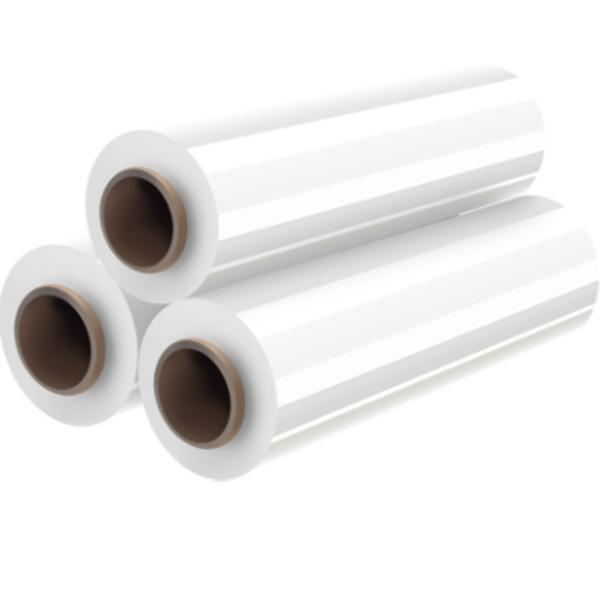
Anyone sourcing food packaging for export knows the checklist keeps getting longer. It's not just price anymore — buyers want to know about tensile strength, adhesion, and whether the film actually clears food contact requirements in the destination market. WJ Plastic has reworked the raw materials and production process behind its high-tensile-strength food-grade PE cling film with exactly these concerns in mind.
Virgin PE, Not Recycled Blend
You can usually tell a lot about cling film just by handling it — how it feels, how clear it is. This film is made from 100% virgin PE, with no recycled content, no plasticizers, no fluorescent brighteners mixed in. It stays clear and clean, which matters whether you're wrapping fresh produce, raw meat, seafood, or cooked food.
For export buyers specifically, raw material consistency carries extra weight, since food contact requirements vary from one target market to another. Keeping the raw materials controlled and the production process standardized is what lets a manufacturer actually meet those requirements order after order, rather than just on the first sample batch.
Stronger Pull, Fewer Tears
The main upgrade here is tensile strength.
Cling film gets stretched hard during normal use — wrapping trays, containers, oddly shaped food items. Weaker film tears under that kind of stress, which slows down packaging lines and burns through more material than it should.
This film holds up better under stretching and resists punctures without losing its flexibility. For commercial kitchens, processing plants, and supermarkets running high volumes daily, fewer tears means fewer interruptions and steadier throughput.
Adhesion That Actually Holds
Inconsistent adhesion is one of the more annoying problems with cling film — it loosens at the edges, air and moisture get in, and the food underneath doesn't stay fresh as long.
This film sticks on its own, no added adhesive coating needed. It clings to bowls, trays, containers, and irregular food surfaces closely enough to form a tight seal. Typical uses include:
- Covering food containers
- Wrapping fresh fruit and vegetables
- Packaging raw meat and seafood
- Covering prepared meals
- Protecting ingredients during prep
- Sealing trays for supermarket display
- Wrapping semi-finished products in commercial kitchens
Built to Handle Different Conditions
Food packaging doesn't sit still — it goes from fridge to counter to transport to handling, sometimes more than once before it reaches a customer. This film balances flexibility with mechanical strength so it holds up across that range, stretching around irregular shapes without losing integrity.
That makes it workable for both home and commercial use — fine for wrapping leftovers in a kitchen drawer, but also durable enough for a supermarket's daily fresh food turnover. For export buyers, that kind of consistency matters more over the long run than any single shipment's price.
Where It Gets Used
At home — covering leftovers, fresh produce, meat, seafood, prepared dishes; keeps food surfaces away from direct air exposure.
In supermarkets — fresh produce, meat trays, prepared foods on display; clear enough that customers can see the product while it's still protected.
In restaurants and catering — covering prepped ingredients and semi-finished items, cutting down on extra packaging steps during service.
In food processing and distribution — worked into daily packaging workflows for temporary protection, ingredient storage, and general handling.
For Buyers Sourcing Long-Term
International buyers increasingly care about traceability, consistency, and food contact safety — not just unit price. For importers and distributors, that means the choice of supplier matters as much as the spec sheet, since quality needs to hold steady across repeat orders, not just the first one.
WJ Plastic keeps its focus on raw material control and manufacturing consistency to serve both domestic and export customers. Film thickness, roll width and length, packaging format, carton configuration, and private-label options can all be worked out based on the buyer's specific market.
What Sets It Apart
- 100% virgin PE material
- Selected for food contact use
- High tensile strength
- Better puncture and tear resistance
- Stable adhesion
- Flexible under stretch
- Clear, clean appearance
- Holds up in refrigerated storage
- Works across multiple packaging settings
- Suitable for domestic and export markets
The Bottom Line
Buyers evaluating cling film tend to circle back to the same questions: what's the raw material, how strong is it, does it stick reliably, is production consistent, and does it actually meet food contact standards. WJ Plastic's upgraded high-tensile-strength food-grade PE cling film is built around answering those questions directly — for households, supermarkets, catering operations, and food processors alike.
Importers, distributors, and food packaging companies looking for a dependable supplier can reach out to WJ Plastic directly to discuss specifications and custom packaging options for their project.